

New management system teaches mushy robots the artwork of staying protected | MIT Information
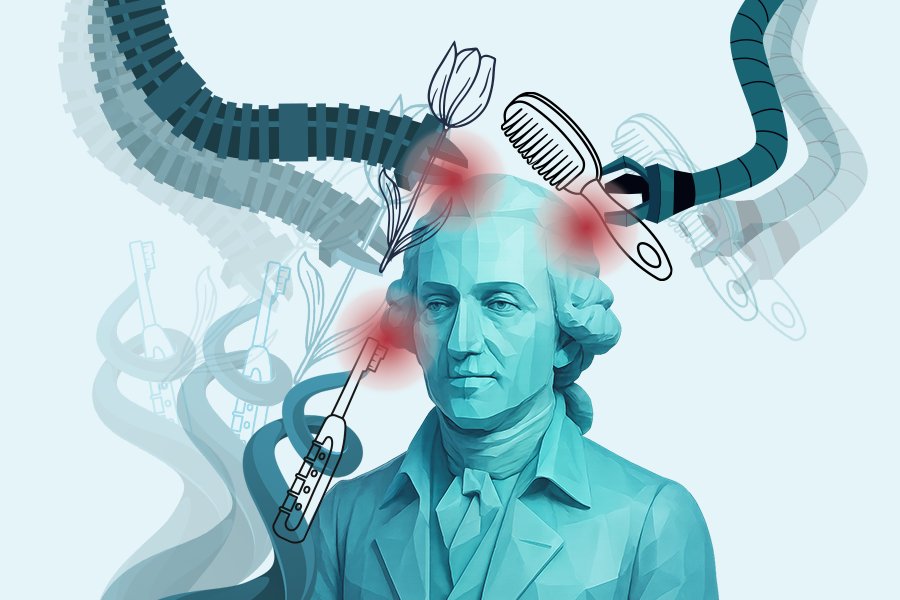

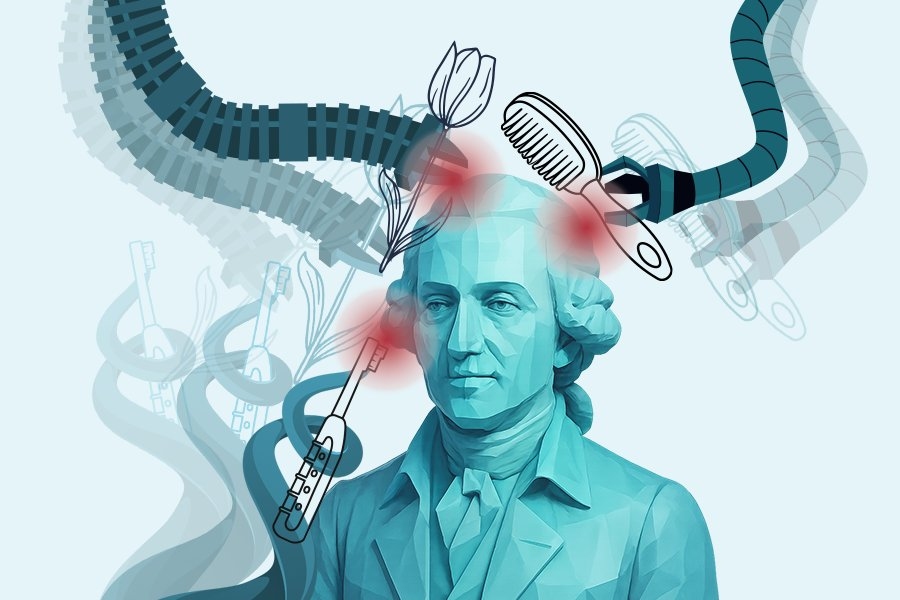
Think about having a continuum mushy robotic arm bend round a bunch of grapes or broccoli, adjusting its grip in actual time because it lifts the article. Not like conventional inflexible robots that usually goal to keep away from contact with the surroundings as a lot as attainable and keep far-off from people for security causes, this arm senses delicate forces, stretching and flexing in ways in which mimic extra of the compliance of a human hand. Its each movement is calculated to keep away from extreme pressure whereas reaching the duty effectively. In MIT Laptop Science and Synthetic Intelligence Laboratory (CSAIL) and Laboratory for Data and Choices Programs (LIDS) labs, these seemingly easy actions are the fruits of complicated arithmetic, cautious engineering, and a imaginative and prescient for robots that may safely work together with people and delicate objects.
Comfortable robots, with their deformable our bodies, promise a future the place machines transfer extra seamlessly alongside folks, help in caregiving, or deal with delicate objects in industrial settings. But that very flexibility makes them troublesome to regulate. Small bends or twists can produce unpredictable forces, elevating the danger of harm or harm. This motivates the necessity for protected management methods for mushy robots.
“Impressed by advances in protected management and formal strategies for inflexible robots, we goal to adapt these concepts to mushy robotics — modeling their complicated habits and embracing, slightly than avoiding, contact — to allow higher-performance designs (e.g., higher payload and precision) with out sacrificing security or embodied intelligence,” says lead senior creator and MIT Assistant Professor Gioele Zardini, who’s a principal investigator in LIDS and the Division of Civil and Environmental Engineering, and an affiliate college with the Institute for Knowledge, Programs, and Society (IDSS). “This imaginative and prescient is shared by current and parallel work from different teams.”
Security first
The workforce developed a brand new framework that blends nonlinear management idea (controlling programs that contain extremely complicated dynamics) with superior bodily modeling strategies and environment friendly real-time optimization to provide what they name “contact-aware security.” On the coronary heart of the strategy are high-order management barrier capabilities (HOCBFs) and high-order management Lyapunov capabilities (HOCLFs). HOCBFs outline protected working boundaries, guaranteeing the robotic doesn’t exert unsafe forces. HOCLFs information the robotic effectively towards its job aims, balancing security with efficiency.
“Primarily, we’re instructing the robotic to know its personal limits when interacting with the surroundings whereas nonetheless reaching its targets,” says MIT Division of Mechanical Engineering PhD scholar Kiwan Wong, the lead creator of a brand new paper describing the framework. “The strategy includes some complicated derivation of sentimental robotic dynamics, contact fashions, and management constraints, however the specification of management aims and security limitations is slightly simple for the practitioner, and the outcomes are very tangible, as you see the robotic shifting easily, reacting to contact, and by no means inflicting unsafe conditions.”
“In contrast with conventional kinematic CBFs — the place forward-invariant protected units are onerous to specify — the HOCBF framework simplifies barrier design, and its optimization formulation accounts for system dynamics (e.g., inertia), guaranteeing the mushy robotic stops early sufficient to keep away from unsafe contact forces,” says Worcester Polytechnic Institute Assistant Professor and former CSAIL postdoc Wei Xiao.
“Since mushy robots emerged, the sphere has highlighted their embodied intelligence and higher inherent security relative to inflexible robots, due to passive materials and structural compliance. But their “cognitive” intelligence — particularly security programs — has lagged behind that of inflexible serial-link manipulators,” says co-lead creator Maximilian Stölzle, a analysis intern at Disney Analysis and previously a Delft College of Expertise PhD scholar and visiting researcher at MIT LIDS and CSAIL. “This work helps shut that hole by adapting confirmed algorithms to mushy robots and tailoring them for protected contact and soft-continuum dynamics.”
The LIDS and CSAIL workforce examined the system on a sequence of experiments designed to problem the robotic’s security and flexibility. In a single take a look at, the arm pressed gently towards a compliant floor, sustaining a exact pressure with out overshooting. In one other, it traced the contours of a curved object, adjusting its grip to keep away from slippage. In one more demonstration, the robotic manipulated fragile objects alongside a human operator, reacting in actual time to surprising nudges or shifts. “These experiments present that our framework is ready to generalize to numerous duties and aims, and the robotic can sense, adapt, and act in complicated situations whereas all the time respecting clearly outlined security limits,” says Zardini.
Comfortable robots with contact-aware security might be an actual value-add in high-stakes locations, in fact. In well being care, they may help in surgical procedures, offering exact manipulation whereas decreasing threat to sufferers. In trade, they may deal with fragile items with out fixed supervision. In home settings, robots might assist with chores or caregiving duties, interacting safely with youngsters or the aged — a key step towards making mushy robots dependable companions in real-world environments.
“Comfortable robots have unimaginable potential,” says co-lead senior creator Daniela Rus, director of CSAIL and a professor within the Division of Electrical Engineering and Laptop Science. “However guaranteeing security and encoding movement duties by way of comparatively easy aims has all the time been a central problem. We needed to create a system the place the robotic can stay versatile and responsive whereas mathematically guaranteeing it gained’t exceed protected pressure limits.”
Combining mushy robotic fashions, differentiable simulation, and management idea
Underlying the management technique is a differentiable implementation of one thing referred to as the Piecewise Cosserat-Phase (PCS) dynamics mannequin, which predicts how a mushy robotic deforms and the place forces accumulate. This mannequin permits the system to anticipate how the robotic’s physique will reply to actuation and complicated interactions with the surroundings. “The side that I most like about this work is the mix of integration of recent and previous instruments coming from totally different fields like superior mushy robotic fashions, differentiable simulation, Lyapunov idea, convex optimization, and injury-severity–based mostly security constraints. All of that is properly blended right into a real-time controller absolutely grounded in first rules,” says co-author Cosimo Della Santina, who’s an affiliate professor at Delft College of Expertise.
Complementing that is the Differentiable Conservative Separating Axis Theorem (DCSAT), which estimates distances between the mushy robotic and obstacles within the surroundings that may be approximated with a sequence of convex polygons in a differentiable method. “Earlier differentiable distance metrics for convex polygons both couldn’t compute penetration depth — important for estimating contact forces — or yielded non-conservative estimates that would compromise security,” says Wong. “As an alternative, the DCSAT metric returns strictly conservative, and due to this fact protected, estimates whereas concurrently permitting for quick and differentiable computation.” Collectively, PCS and DCSAT give the robotic a predictive sense of its surroundings for extra proactive, protected interactions.
Trying forward, the workforce plans to increase their strategies to three-dimensional mushy robots and discover integration with learning-based methods. By combining contact-aware security with adaptive studying, mushy robots might deal with much more complicated, unpredictable environments.
“That is what makes our work thrilling,” says Rus. “You’ll be able to see the robotic behaving in a human-like, cautious method, however behind that grace is a rigorous management framework guaranteeing it by no means oversteps its bounds.”
“Comfortable robots are usually safer to work together with than rigid-bodied robots by design, as a result of compliance and energy-absorbing properties of their our bodies,” says College of Michigan Assistant Professor Daniel Bruder, who wasn’t concerned within the analysis. “Nevertheless, as mushy robots develop into sooner, stronger, and extra succesful, that will now not be sufficient to make sure security. This work takes an important step in the direction of guaranteeing mushy robots can function safely by providing a technique to restrict contact forces throughout their total our bodies.”
The workforce’s work was supported, partly, by The Hong Kong Jockey Membership Scholarships, the European Union’s Horizon Europe Program, Cultuurfonds Wetenschapsbeurzen, and the Rudge (1948) and Nancy Allen Chair. Their work was revealed earlier this month within the Institute of Electrical and Electronics Engineers’ Robotics and Automation Letters.