

New prediction mannequin may enhance the reliability of fusion energy crops | MIT Information
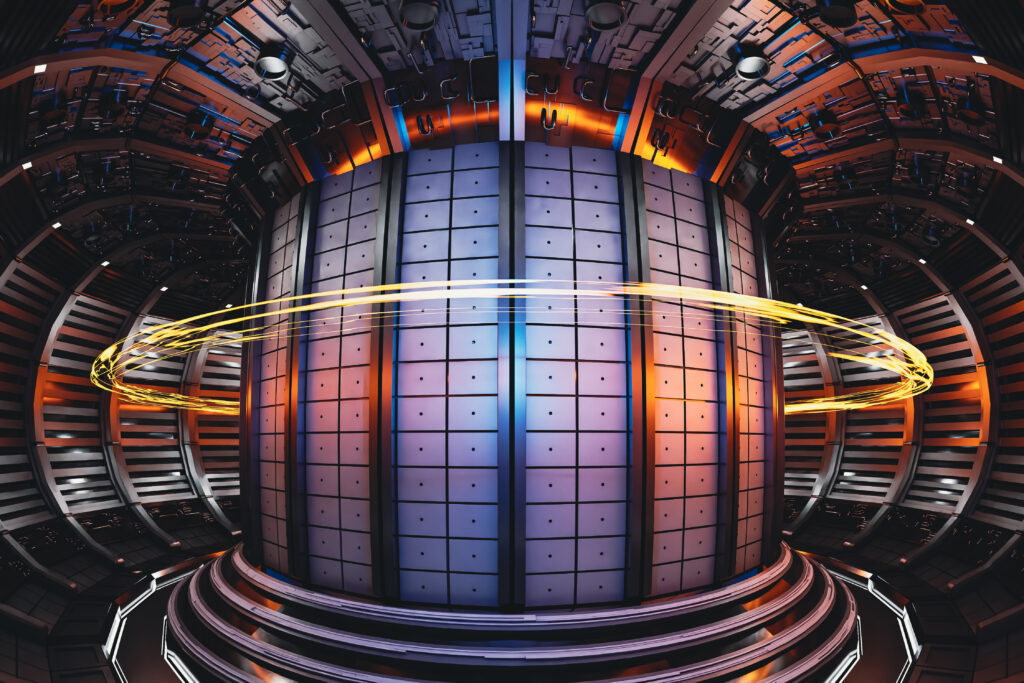

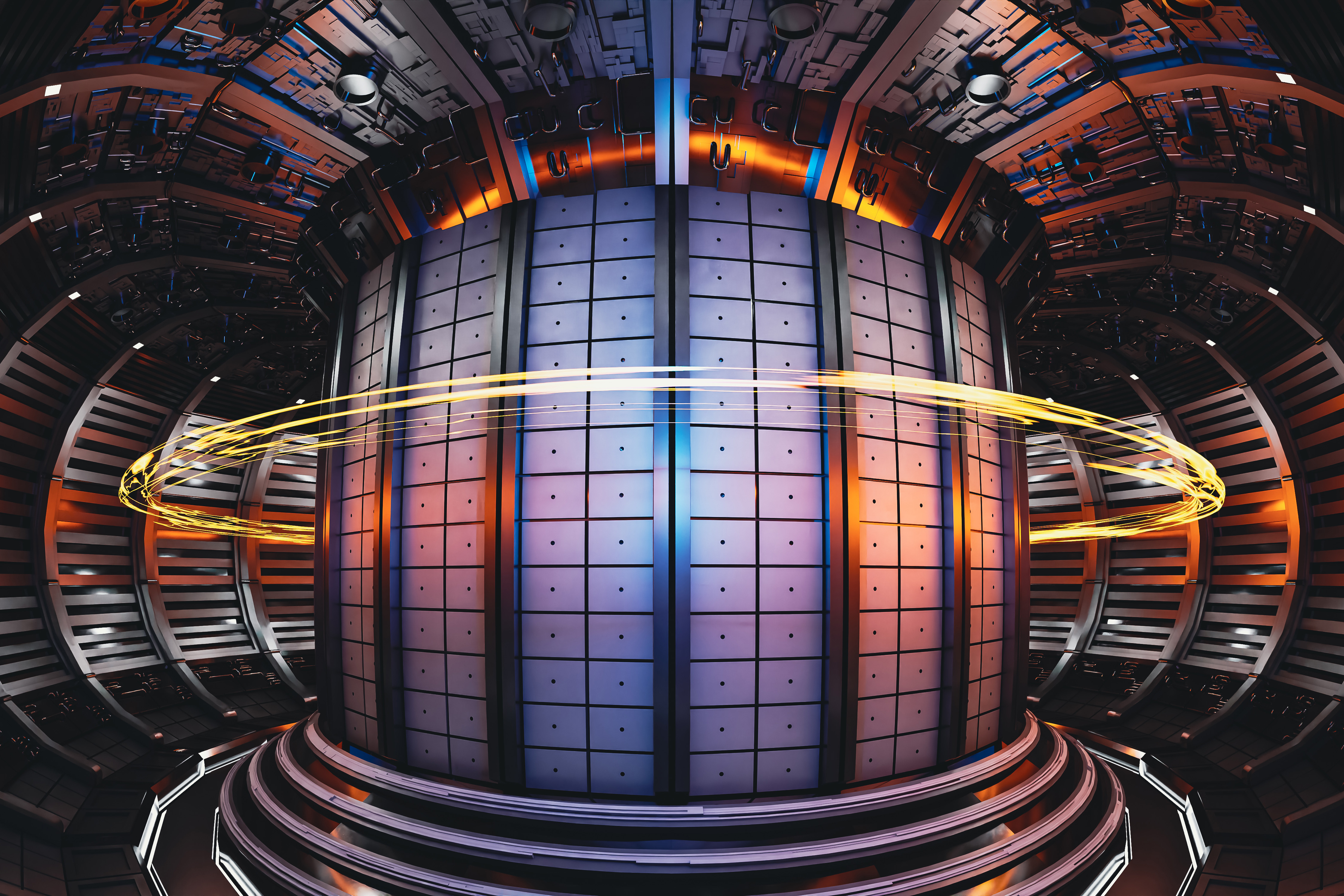
Tokamaks are machines that are supposed to maintain and harness the facility of the solar. These fusion machines use highly effective magnets to comprise a plasma hotter than the solar’s core and push the plasma’s atoms to fuse and launch vitality. If tokamaks can function safely and effectively, the machines may someday present clear and limitless fusion vitality.
Immediately, there are a selection of experimental tokamaks in operation all over the world, with extra underway. Most are small-scale analysis machines constructed to research how the gadgets can spin up plasma and harness its vitality. One of many challenges that tokamaks face is learn how to safely and reliably flip off a plasma present that’s circulating at speeds of as much as 100 kilometers per second, at temperatures of over 100 million levels Celsius.
Such “rampdowns” are obligatory when a plasma turns into unstable. To stop the plasma from additional disrupting and probably damaging the system’s inside, operators ramp down the plasma present. However often the rampdown itself can destabilize the plasma. In some machines, rampdowns have triggered scrapes and scarring to the tokamak’s inside — minor injury that also requires appreciable time and sources to restore.
Now, scientists at MIT have developed a technique to foretell how plasma in a tokamak will behave throughout a rampdown. The workforce mixed machine-learning instruments with a physics-based mannequin of plasma dynamics to simulate a plasma’s conduct and any instabilities which will come up because the plasma is ramped down and turned off. The researchers educated and examined the brand new mannequin on plasma knowledge from an experimental tokamak in Switzerland. They discovered the tactic shortly discovered how plasma would evolve because it was tuned down in numerous methods. What’s extra, the tactic achieved a excessive stage of accuracy utilizing a comparatively small quantity of knowledge. This coaching effectivity is promising, given that every experimental run of a tokamak is pricey and high quality knowledge is proscribed because of this.
The brand new mannequin, which the workforce highlights this week in an open-access Nature Communications paper, may enhance the security and reliability of future fusion energy crops.
“For fusion to be a helpful vitality supply it’s going to must be dependable,” says lead creator Allen Wang, a graduate scholar in aeronautics and astronautics and a member of the Disruption Group at MIT’s Plasma Science and Fusion Middle (PSFC). “To be dependable, we have to get good at managing our plasmas.”
The research’s MIT co-authors embody PSFC Principal Analysis Scientist and Disruptions Group chief Cristina Rea, and members of the Laboratory for Info and Determination Techniques (LIDS) Oswin So, Charles Dawson, and Professor Chuchu Fan, together with Mark (Dan) Boyer of Commonwealth Fusion Techniques and collaborators from the Swiss Plasma Middle in Switzerland.
“A fragile steadiness”
Tokamaks are experimental fusion gadgets that have been first constructed within the Soviet Union within the Fifties. The system will get its title from a Russian acronym that interprets to a “toroidal chamber with magnetic coils.” Simply as its title describes, a tokamak is toroidal, or donut-shaped, and makes use of highly effective magnets to comprise and spin up a fuel to temperatures and energies excessive sufficient that atoms within the ensuing plasma can fuse and launch vitality.
Immediately, tokamak experiments are comparatively low-energy in scale, with few approaching the scale and output wanted to generate protected, dependable, usable vitality. Disruptions in experimental, low-energy tokamaks are usually not a difficulty. However as fusion machines scale as much as grid-scale dimensions, controlling a lot higher-energy plasmas in any respect phases shall be paramount to sustaining a machine’s protected and environment friendly operation.
“Uncontrolled plasma terminations, even throughout rampdown, can generate intense warmth fluxes damaging the inner partitions,” Wang notes. “Very often, particularly with the high-performance plasmas, rampdowns really can push the plasma nearer to some instability limits. So, it’s a fragile steadiness. And there’s a number of focus now on learn how to handle instabilities in order that we will routinely and reliably take these plasmas and safely energy them down. And there are comparatively few research achieved on how to do this effectively.”
Bringing down the heart beat
Wang and his colleagues developed a mannequin to foretell how a plasma will behave throughout tokamak rampdown. Whereas they may have merely utilized machine-learning instruments resembling a neural community to study indicators of instabilities in plasma knowledge, “you would want an ungodly quantity of knowledge” for such instruments to discern the very delicate and ephemeral modifications in extraordinarily high-temperature, high-energy plasmas, Wang says.
As a substitute, the researchers paired a neural community with an current mannequin that simulates plasma dynamics based on the basic guidelines of physics. With this mix of machine studying and a physics-based plasma simulation, the workforce discovered that solely a pair hundred pulses at low efficiency, and a small handful of pulses at excessive efficiency, have been adequate to coach and validate the brand new mannequin.
The information they used for the brand new research got here from the TCV, the Swiss “variable configuration tokamak” operated by the Swiss Plasma Middle at EPFL (the Swiss Federal Institute of Know-how Lausanne). The TCV is a small experimental fusion experimental system that’s used for analysis functions, typically as take a look at mattress for next-generation system options. Wang used the info from a number of hundred TCV plasma pulses that included properties of the plasma resembling its temperature and energies throughout every pulse’s ramp-up, run, and ramp-down. He educated the brand new mannequin on this knowledge, then examined it and located it was in a position to precisely predict the plasma’s evolution given the preliminary circumstances of a specific tokamak run.
The researchers additionally developed an algorithm to translate the mannequin’s predictions into sensible “trajectories,” or plasma-managing directions {that a} tokamak controller can mechanically perform to as an example modify the magnets or temperature keep the plasma’s stability. They carried out the algorithm on a number of TCV runs and located that it produced trajectories that safely ramped down a plasma pulse, in some circumstances quicker and with out disruptions in comparison with runs with out the brand new technique.
“Sooner or later the plasma will all the time go away, however we name it a disruption when the plasma goes away at excessive vitality. Right here, we ramped the vitality all the way down to nothing,” Wang notes. “We did it numerous occasions. And we did issues significantly better throughout the board. So, we had statistical confidence that we made issues higher.”
The work was supported partially by Commonwealth Fusion Techniques (CFS), an MIT spinout that intends to construct the world’s first compact, grid-scale fusion energy plant. The corporate is creating a demo tokamak, SPARC, designed to supply net-energy plasma, that means that it ought to generate extra vitality than it takes to warmth up the plasma. Wang and his colleagues are working with CFS on ways in which the brand new prediction mannequin and instruments like it might higher predict plasma conduct and stop expensive disruptions to allow protected and dependable fusion energy.
“We’re attempting to sort out the science inquiries to make fusion routinely helpful,” Wang says. “What we’ve achieved right here is the beginning of what’s nonetheless a protracted journey. However I believe we’ve made some good progress.”
Extra assist for the analysis got here from the framework of the EUROfusion Consortium, through the Euratom Analysis and Coaching Program and funded by the Swiss State Secretariat for Schooling, Analysis, and Innovation.