
Decoding the Arctic to foretell winter climate | MIT Information

Each autumn, because the Northern Hemisphere strikes towards winter, Judah Cohen begins to piece collectively a fancy atmospheric puzzle. Cohen, a analysis scientist in MIT’s Division of Civil and Environmental Engineering (CEE), has spent many years finding out how situations within the Arctic set the course for winter climate all through Europe, Asia, and North America. His analysis dates again to his postdoctoral work with Bacardi and Stockholm Water Foundations Professor Dara Entekhabi that checked out snow cowl within the Siberian area and its reference to winter forecasting.
Cohen’s outlook for the 2025–26 winter highlights a season characterised by indicators rising from the Arctic utilizing a brand new era of synthetic intelligence instruments that assist develop the total atmospheric image.
Wanting past the standard local weather drivers
Winter forecasts rely closely on El Niño–Southern Oscillation (ENSO) diagnostics, that are the tropical Pacific Ocean and ambiance situations that affect climate around the globe. Nevertheless, Cohen notes that ENSO is comparatively weak this 12 months.
“When ENSO is weak, that’s when local weather indicators from the Arctic turns into particularly essential,” Cohen says.
Cohen screens high-latitude diagnostics in his subseasonal forecasting, comparable to October snow cowl in Siberia, early-season temperature modifications, Arctic sea-ice extent, and the steadiness of the polar vortex. “These indicators can inform a surprisingly detailed story concerning the upcoming winter,” he says.
Certainly one of Cohen’s most constant knowledge predictors is October’s climate in Siberia. This 12 months, when the Northern Hemisphere skilled an unusually heat October, Siberia was colder than regular with an early snowfall. “Chilly temperatures paired with early snow cowl are likely to strengthen the formation of chilly air lots that may later spill into Europe and North America,” says Cohen — climate patterns which might be traditionally linked to extra frequent chilly spells later in winter.
Heat ocean temperatures within the Barents–Kara Sea and an “easterly” section of the quasi-biennial oscillation additionally recommend a probably weaker polar vortex in early winter. When this disturbance {couples} with floor situations in December, it results in lower-than-normal temperatures throughout components of Eurasia and North America earlier within the season.
AI subseasonal forecasting
Whereas AI climate fashions have made spectacular strides showcasing in short-range (one-to–10-day) forecasts, these advances haven’t but utilized to longer durations. The subseasonal prediction overlaying two to 6 weeks stays one of many hardest challenges within the subject.
That hole is why this 12 months may very well be a turning level for subseasonal climate forecasting. A crew of researchers working with Cohen received first place for the autumn season within the 2025 AI WeatherQuest subseasonal forecasting competitors, held by the European Centre for Medium-Vary Climate Forecasts (ECMWF). The problem evaluates how properly AI fashions seize temperature patterns over a number of weeks, the place forecasting has been traditionally restricted.
The successful mannequin mixed machine-learning sample recognition with the identical Arctic diagnostics Cohen has refined over many years. The system demonstrated vital beneficial properties in multi-week forecasting, surpassing main AI and statistical baselines.
“If this stage of efficiency holds throughout a number of seasons, it may signify an actual step ahead for subseasonal prediction,” Cohen says
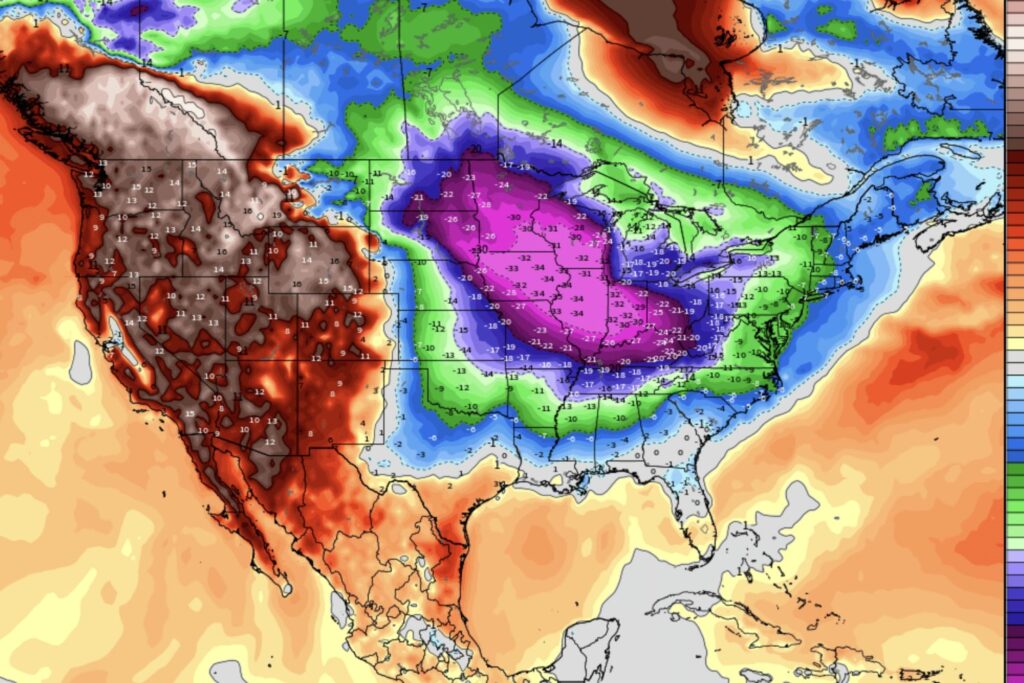
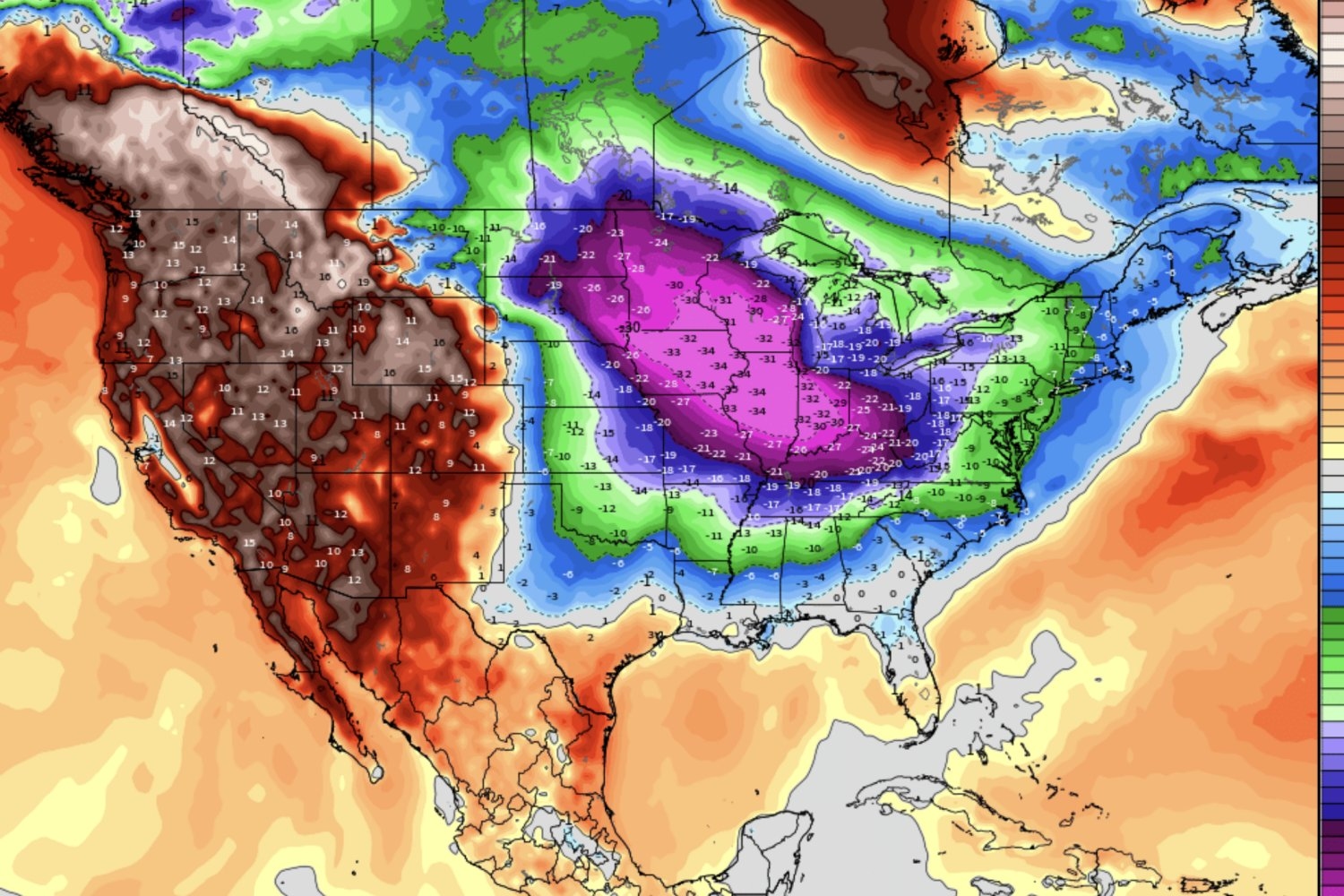
The mannequin additionally detected a possible chilly surge in mid-December for the U.S. East Coast a lot sooner than regular, weeks earlier than such alerts usually come up. The forecast was extensively publicized within the media in real-time. If validated, Cohen explains, it might present how combining Arctic indicators with AI may prolong the lead time for predicting impactful climate.
“Flagging a possible excessive occasion three to 4 weeks upfront could be a watershed second,” he provides. “It could give utilities, transportation programs, and public companies extra time to arrange.”
What this winter could maintain
Cohen’s mannequin exhibits a larger likelihood of colder-than-normal situations throughout components of Eurasia and central North America later within the winter, with the strongest anomalies seemingly mid-season.
“We’re nonetheless early, and patterns can shift,” Cohen says. “However the components for a colder winter sample are there.”
As Arctic warming hastens, its impression on winter conduct is changing into extra evident, making it more and more essential to grasp these connections for power planning, transportation, and public security. Cohen’s work exhibits that the Arctic holds untapped subseasonal forecasting energy, and AI could assist unlock it for time frames which have lengthy been difficult for conventional fashions.
In November, Cohen even appeared as a clue in The Washington Publish crossword, a small signal of how extensively his analysis has entered public conversations about winter climate.
“For me, the Arctic has all the time been the place to observe,” he says. “Now AI is giving us new methods to interpret its alerts.”
Cohen will proceed to replace his outlook all through the season on his blog.