

AI Reminiscence Starvation Forces Micron Client Exit
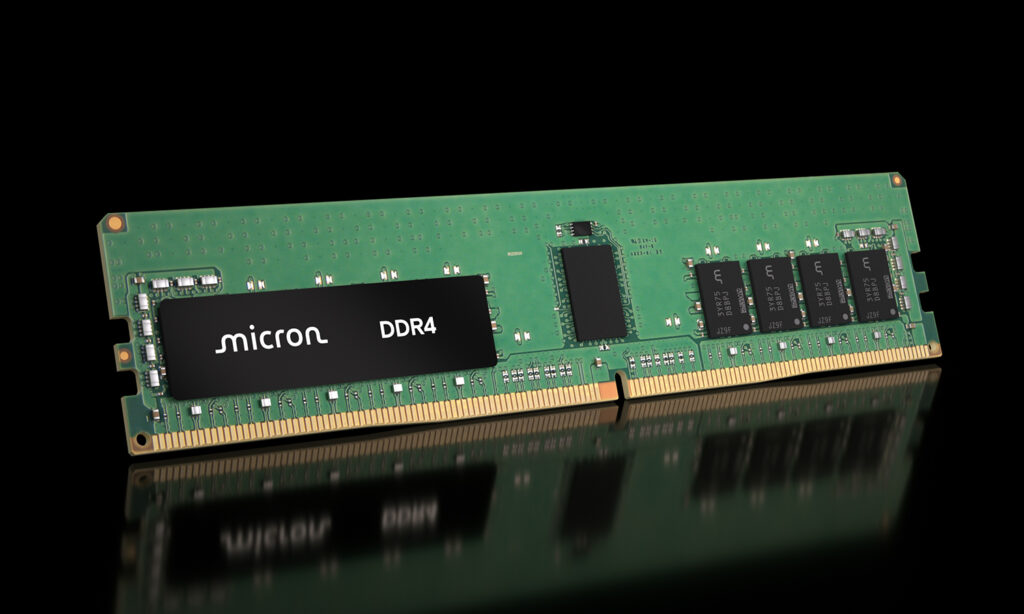

Within the basement of a Boise, Idaho, dental workplace in 1978, 4 engineers based what would turn out to be one in every of America’s semiconductor giants. Ward Parkinson, Joe Parkinson, Dennis Wilson, and Doug Pitman began Micron Know-how as a modest design consultancy, backed by native traders together with potato magnate J.R. Simplot.
By 1983, they’d achieved a technological breakthrough – producing chips roughly half the dimensions of Japan’s main merchandise. Almost 5 many years later, that very same firm has decided that crystallises synthetic intelligence’s profound impression on {hardware} economics: AI reminiscence starvation is forcing producers to desert whole market segments.
On December 3, 2025, Micron announced it might utterly exit the patron reminiscence market, discontinuing its 29-year-old Essential model by February 2026. “The AI-driven development within the information centre has led to a surge in demand for reminiscence and storage,” mentioned Sumit Sadana, Micron’s government vice chairman and chief enterprise officer.
“Micron has made the tough resolution to exit the Essential shopper enterprise to enhance provide and help for our bigger, strategic clients in faster-growing segments.”
Translation: information centres working AI workloads can pay considerably extra for reminiscence than particular person customers ever may, and Micron’s fabrication capability can not serve each markets concurrently.
The announcement represents each a enterprise resolution and a watershed second revealing how AI reminiscence starvation calls for are restructuring world semiconductor provide chains, forcing producers to make stark selections about which clients ‘deserve’ entry to finite manufacturing capability.
The economics driving AI reminiscence starvation
Micron’s withdrawal displays financial realities. Because the world’s third-largest DRAM producer with an roughly 20% of worldwide market share, the corporate sits between South Korean giants Samsung Electronics (43%) and SK Hynix (35%). Collectively, these three management roughly 95% of worldwide DRAM manufacturing – an oligopoly now dealing with unprecedented demand from AI infrastructure builders.
The margin differentials inform the story. Client RAM modules compete in unstable retail markets with razor-thin profitability. Enterprise contracts for high-bandwidth reminiscence (HBM) utilized in AI accelerators and DDR5 modules for information centre servers ship considerably greater common promoting costs, multi-year commitments, and predictable demand.
For reminiscence producers, every fabrication wafer dedicated to shopper merchandise represents foregone income from higher-value enterprise contracts – a chance value that has turn out to be economically indefensible as AI demand accelerates.
The numbers illustrate the magnitude of the shift. Micron reported file fiscal 2025 income of US$37.38 billion, representing practically 50% year-over-year development pushed primarily by information centre and AI functions, which accounted for 56% of complete income. SK Hynix has reportedly offered out its whole 2026 manufacturing capability for DRAM, HBM, and NAND merchandise.
Client reminiscence costs have surged accordingly. DRAM spot costs elevated 172% year-over-year as of Q3 2025, with retail costs for 32GB DDR5 modules leaping 163-619% in world markets since September 2025. Element suppliers report paying US$13 for 16GB DDR5 chips that value US$7 simply six weeks earlier – will increase adequate to remove whole gross margins for third-party manufacturers.
Client market restructuring amid AI reminiscence starvation
Micron’s exit alters the patron reminiscence panorama. Third-party manufacturers, together with Corsair, G.Talent, Kingston, and ADATA supply their DRAM chips from the main producers. With Micron withdrawing fully, these distributors should compete extra aggressively for allocation from Samsung and SK Hynix – each concurrently prioritising high-bandwidth reminiscence manufacturing for AI accelerators.
The focus creates vulnerabilities. Samsung and SK Hynix now comprise the one main suppliers serving each shopper and enterprise markets. Each face equivalent capability allocation pressures. If AI infrastructure funding maintains present trajectories, further producers might cut back or restructure shopper operations.
Provide chain constraints are already materialising past DRAM. NAND flash wafer contract costs elevated by over 60% in November 2025. Graphics reminiscence markets face pressures as producers shift to GDDR7 for next-generation GPUs, creating GDDR6 shortages that inflated costs by roughly 30%. Arduous drive producers elevated costs 5-10%, citing restricted provide.
For customers and small companies, the implications prolong past pricing. Product availability might turn out to be more and more constrained throughout peak demand intervals. The discount in direct provider participation might compress product differentiation and restrict aggressive pricing dynamics that beforehand benefited consumers.
The broader trade realignment
Micron’s shopper exodus alerts a structural transformation slightly than a short lived reallocation. The AI infrastructure increase differs essentially from earlier know-how transitions. Private computing, web growth, and cellular gadgets created sustained reminiscence demand over many years with gradual capability changes.
AI infrastructure deployment compresses that timeline dramatically – hyperscale operators are committing a whole bunch of billions in information centre development over just some years. Information centre semiconductor markets illustrate the size. The full addressable market reached US$209 billion in 2024, and is projected to develop to just about US$500 billion by 2030, pushed primarily by AI and high-performance computing.
GPU income alone is forecast to increase from US$100 billion in 2024 to US$215 billion by 2030, with every GPU requiring substantial high-bandwidth reminiscence allocation.
Reminiscence structure evolution compounds the problem. AI coaching workloads more and more require HBM3E modules, which supply superior bandwidth and energy effectivity, whereas inference workloads demand DDR5 with tight latency specs.
Automotive functions adopting zonal architectures require multi-gigabyte DRAM configurations. Every utility instructions premium pricing and long-term contracts – financial incentives systematically pulling manufacturing capability away from shopper markets.
The manufacturing response displays these priorities. Samsung is advancing 1c DRAM manufacturing and planning mass manufacturing of HBM4 in 2025 whereas phasing out DDR4 fully. Micron started mass manufacturing of DRAM utilizing Excessive Ultraviolet (EUV) lithography in 2025.
SK Hynix focuses improvement assets on HBM and superior LPDDR options. All three producers are directing analysis and capital funding towards functions providing superior returns.
What this implies for enterprise consumers
Enterprise procurement groups face their very own challenges as reminiscence markets restructure. Reminiscence represents 10-25% of bill-of-materials prices for typical servers and business PCs. Value will increase of 20-30% in reminiscence parts translate to 5-10% will increase in complete system prices, compounding into thousands and thousands in further expenditure for organisations procuring at scale.
Strategic responses embrace ahead buying agreements, establishing stronger direct relationships with producers, and diversifying vendor partnerships. The timing uncertainty presents specific challenges. New fabrication capability is underneath development, supported by authorities incentives, however requires years to succeed in manufacturing readiness.
Essential questions forward
Micron’s shopper market exit raises elementary questions. Will Samsung and SK Hynix preserve shopper product strains, or will related capability pressures pressure comparable reductions? If shopper reminiscence turns into primarily a third-party model market sourcing chips from producers prioritising enterprise clients, what occurs to product innovation and aggressive pricing?
The focus amongst simply two main producers serving shopper markets creates potential vulnerabilities. Provide chain disruptions affecting both Samsung or SK Hynix would have an outsized impression on world shopper product availability.
Broader implications prolong to know-how accessibility. If reminiscence pricing stays elevated or availability constrained for shopper merchandise, the prices of private computing and small enterprise infrastructure enhance accordingly, probably widening digital divides.
Micron’s resolution crystallises synthetic intelligence’s position as a transformative pressure reshaping not simply software program, however the elementary economics of {hardware} manufacturing. The Essential model’s retirement after 29 years marks the tip of a time when reminiscence producers may serve each shopper and enterprise segments concurrently and profitably.
For the broader know-how ecosystem, starvation for AI reminiscence has turn out to be the semiconductor trade’s dominant development driver, commanding assets at ranges that essentially alter which markets producers select to serve.
(Photograph: Micron Technology)

Need to study extra about AI and massive information from trade leaders? Take a look at AI & Big Data Expo going down in Amsterdam, California, and London. The great occasion is a part of TechEx and is co-located with different main know-how occasions together with the Cyber Security Expo. Click on here for extra info.
AI Information is powered by TechForge Media. Discover different upcoming enterprise know-how occasions and webinars here.