
New MIT program to coach army leaders for the AI age | MIT Information
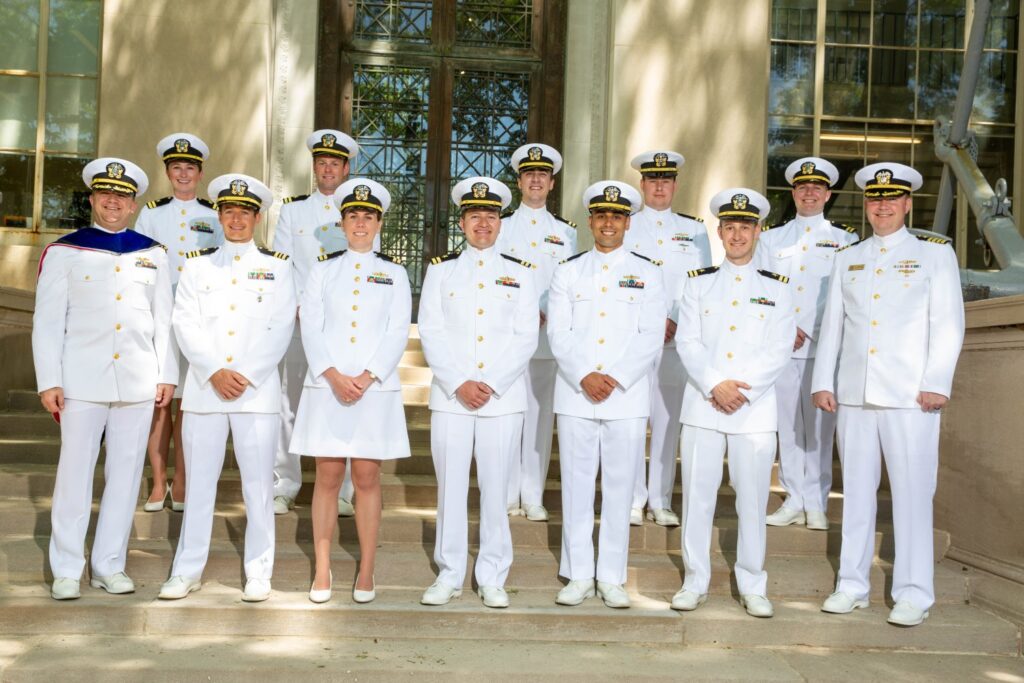

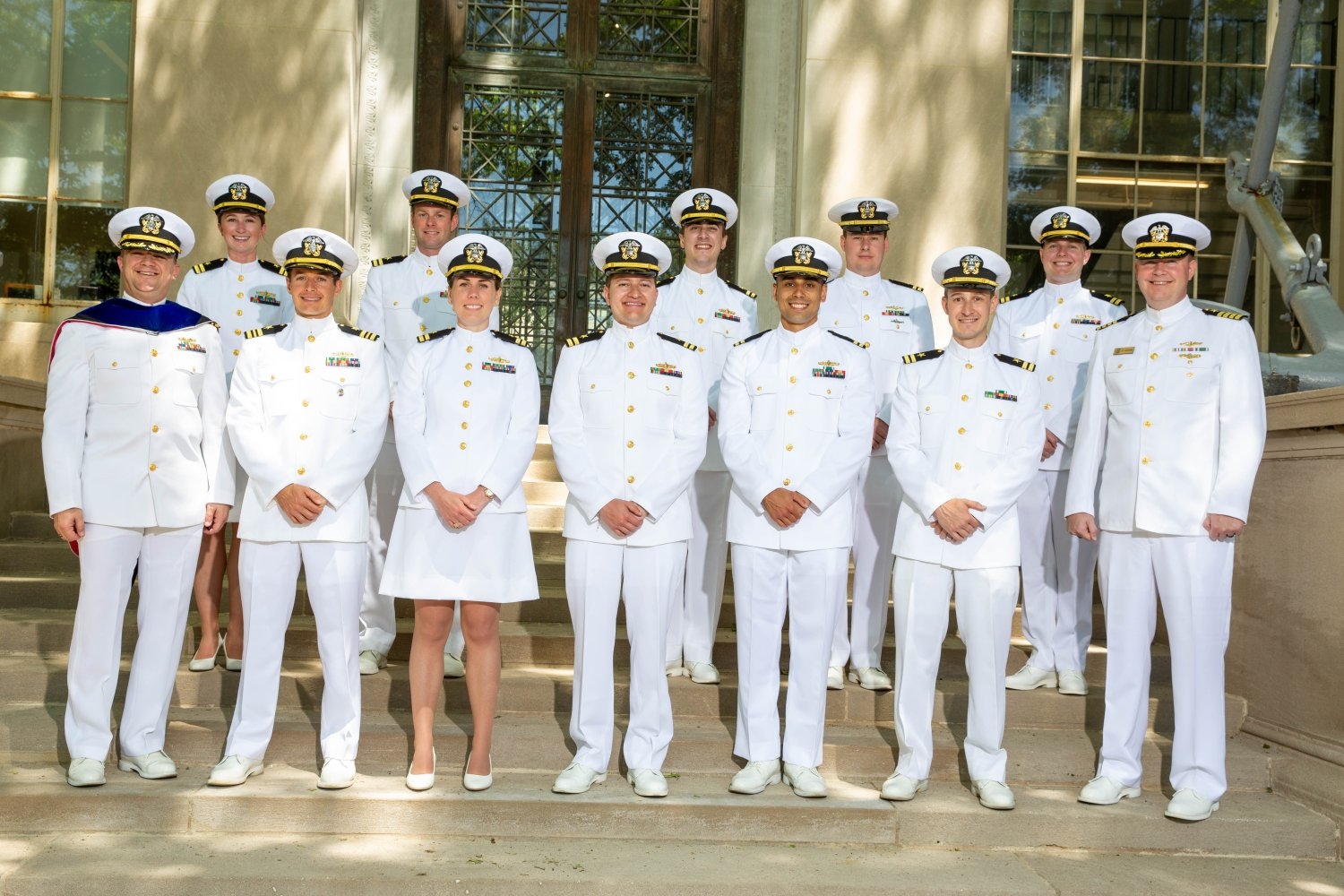
Synthetic intelligence can improve decision-making and allow motion with lowered threat and larger precision, making it a crucial software for nationwide safety. A brand new program supplied collectively by the MIT departments of Mechanical Engineering (Course 2, MechE) and Electrical Engineering and Pc Science (Course 6, EECS) will present breadth and depth in technical research for naval officers, in addition to a path for non-naval officers finding out at MIT, to develop of their understanding of utilized AI for naval and army functions.
“The potential for synthetic intelligence is simply beginning to be absolutely realized. It’s a software that dramatically improves velocity, effectivity, and decision-making with numerous functions,” says Commander Christopher MacLean, MIT affiliate professor of the follow in mechanical engineering, naval building, and engineering. “AI is a power multiplier that can be utilized for information processing, determination help, unmanned and autonomous programs, cyber protection, logistics and provide chains, power administration, and lots of different fields.”
This system, known as “2N6: Applied Artificial Intelligence Program for Naval Officers,” contains a two-year grasp of science diploma in mechanical engineering with an accompanying AI certificates awarded by the MIT Schwarzman School of Computing.
“The officers coming into this program will be taught from the world’s specialists, and conduct cutting-edge related analysis, and can exit this system greatest ready for his or her roles as leaders throughout the U.S. naval enterprise,” says MacLean.
The 2N6 curriculum is utility centered, and the content material is constructed to fulfill the U.S. Navy’s sub-specialty code for Utilized Synthetic Intelligence. College students will be taught core AI ideas, in addition to functions to particular subjects, equivalent to decision-making for computational workouts; AI for manufacturing and design, with particular emphasis on navy functions; and AI for marine autonomy of floor and underwater automobiles.
“The increasing affect of synthetic intelligence is redefining our strategy to problem-solving. AI holds the potential to handle a few of the most urgent points in almost each subject,” says Dan Huttenlocher, dean of the MIT Schwarzman School of Computing and Henry Ellis Warren Professor of Electrical Engineering and Pc Science. “I’m honored that the school can contribute to and help such an important program that can equip our nation’s naval officers with the technical experience they want for mission-relevant challenges.”
MIT has been a number one middle of ship analysis and design for over a century, with work on the Institute at the moment representing vital developments in fluid mechanics and hydrodynamics, acoustics, offshore mechanics, marine robotics and sensors, and ocean sensing and forecasting. The 2N program will have a good time its one hundred and twenty fifth yr at MIT in 2026.
“In MechE, we’re embracing the usage of AI to discover new frontiers in analysis and training, with deep grounding within the fundamentals, design, and scaling of bodily programs,” says John Hart, the Class of 1922 Professor and head of MechE. “With the 2N6 program, we’re proud to be on the helm of such an vital cost in coaching the subsequent era of leaders for the Navy.”
“Breakthroughs in synthetic intelligence are reshaping society and advancing human decision-making and creativity,” says Asu Ozdaglar, deputy dean of the MIT Schwarzman School of Computing, head of EECS, and MathWorks Professor. “We’re delighted to associate with the Division of Mechanical Engineering in launching this vital collaboration with the U.S. Navy. This system will discover not solely the forefront of AI advances, but additionally its efficient utility in Navy operations.”
2N6 was created following a go to to campus from Admiral Samuel Paparo, commander of the U.S. Indo-Pacific Command, with MIT Provost Anantha Chandrakasan, who was then dean of engineering and chief innovation and technique officer.
“[Admiral Paparo] was given an outline of a few of the cutting-edge work and analysis that MIT has accomplished and is doing within the subject of AI, [and was introduced to the 2N program],” says MacLean. “The admiral made the connection, envisioning an utilized AI program much like 2N.”
2N6 will run as a pilot program for no less than two years. This system’s first cohort will comprise solely U.S. Navy officers, with plans to broaden extra broadly.
“We’re thrilled to construct on the long-standing relationship between MIT and the U.S. Navy with this new program,” says Themis Sapsis, William I. Koch Professor in mechanical engineering and the director of the Heart for Ocean Engineering at MIT. “It’s particularly designed to coach naval officers on the basics and functions of AI, but additionally contain them in analysis that has direct influence to the Navy. We consider that 2N6 can mannequin a brand new paradigm for superior AI training centered extra broadly on supporting nationwide safety.”